
Bryan Johnson Just Told 700,000 People to Find a Licensed Facilitator. Are There Enough of You?
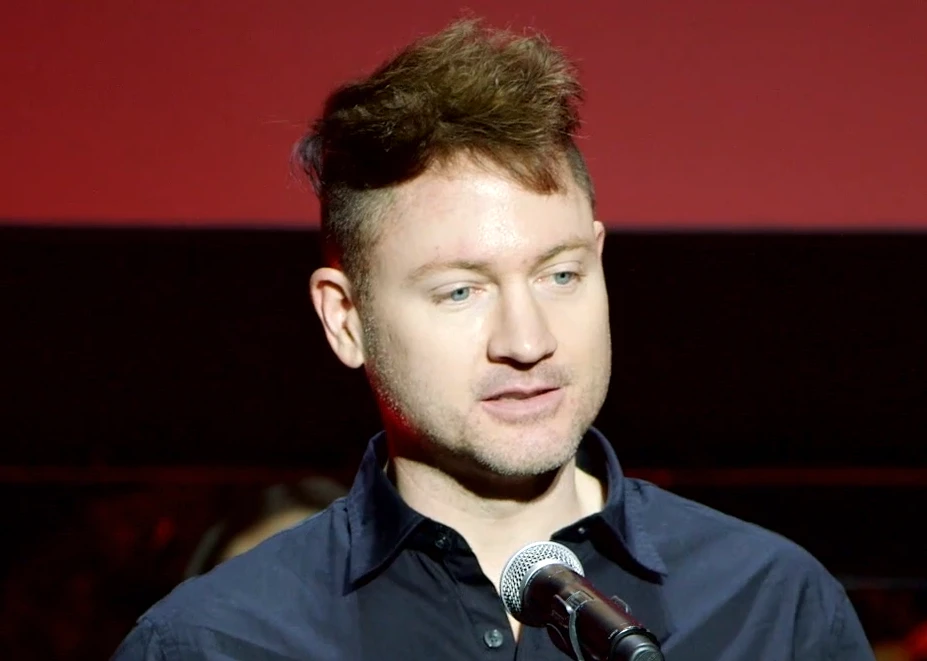
A few days ago, Bryan Johnson – the biohacker who has spent millions quantifying every measurable function of his body – livestreamed himself taking 5-MeO-DMT in front of hundreds of thousands of people.
He called it the most profound experience of his life. He described ego dissolution, a childlike reset, and what felt like decades of psychological weight lifting in under 30 minutes. He backed it with brain scans. And then, unprompted, he turned to his audience and said: you should never do this without a professional facilitator.
He’s right. And it’s something we’ve known in this community for a long time.
What he may not have intended – and what our field needs to reckon with together – is what happens next. Hundreds of thousands of people just received an introduction to 5-MeO-DMT from one of the most followed biohackers on the planet.
Many of them are now curious. Some are actively searching. And education along with the need for properly trained facilitators is key.

What Bryan Johnson Actually Did for This Field
Johnson didn’t approach 5-MeO-DMT as a spiritual seeker. He approached it the way he approaches everything: as a scientist with a data problem to solve.
He went in with functional MRI, structural MRI, EEG, and an optical brain interface. He wanted to know whether 5-MeO-DMT could restore youthful brain patterns as a longevity intervention. He had pre-clinical evidence. He had a hypothesis. He had a team.
What he got was harder to quantify. He described the moment the compound took effect as a binary choice between panic and surrender. Release completely – ego, control, self, all of it – and something else opens up. He called what followed unimaginable bliss. Not visual. Not dreamlike. Fundamental.
The neuroscience he described is something we’ve been building our curriculum around for years. The default mode network – the engine of self-referential thinking and rumination – went quiet. Not dampened, as he’d observed with psilocybin. Silenced. What emerged was neuroplasticity: new connections forming, old patterns softening.
He woke up the next morning laughing in a dream. He said he felt childlike. Lighter.
This matters for our community – not because the experience is new information, but because of who said it and to whom. Johnson situated 5-MeO-DMT alongside rapamycin, metformin, and hyperbaric oxygen therapy. He gave clinicians and healthcare professionals a new entry point into a conversation our field has long been trying to start.
And then he handed the baton to us by saying: this needs a professional.
700,000+ people watched Johnson’s livestream · 2 Phase 3 5-MeO-DMT clinical programmes launched in 2026 · ~100 psychedelics-related bills in US legislatures

Assessing the Gap
Quality 5-MeO-DMT facilitator training has always run in small cohorts – rarely more than fifteen to twenty students per year. That’s not a commercial choice. It reflects what the work genuinely requires. You cannot compress the development of real competence. You cannot mass-produce it.
At the same time, the clinical and regulatory landscape is accelerating faster than the facilitator pipeline. Two Phase 3 clinical programmes studying 5-MeO-DMT for treatment-resistant depression launched in 2026. The FDA awarded breakthrough therapy status to an intranasal 5-MeO-DMT candidate in late 2025. Around one hundred psychedelics-related bills are moving through US state and federal legislatures. The infrastructure is being built.
The question is whether enough trained practitioners will be ready when it opens.
When demand outpaces the supply of qualified facilitators, the gap fills with undertrained ones. It already has. Reports of unscrupulous operators, poorly held sessions, and inadequate aftercare are a predictable consequence of a field growing faster than its professional standards.
Johnson named this clearly. He contrasted his supervised, quantified, professionally-supported experience with how most people encounter psychedelics: unknown strain, unknown dose, no preparation, no support. The structured, professional approach reduces that risk significantly. We built F.I.V.E. around exactly that belief.
When demand outpaces the supply of qualified facilitators, the gap fills with undertrained ones. It already has.

What Johnson’s Experience Tells Practitioners Specifically
There’s something in the transcript that deserves more attention than it gets in mainstream coverage.
Johnson raised a question about decay. The reset felt profound – but how long does it last? Will he return to his old patterns in 30 days? 60 days? He didn’t know. That uncertainty wasn’t rhetorical. It was honest.
The answer is integration. The neuroplasticity he described isn’t a permanent installation. It’s a window. What happens in that window determines whether the changes hold. Integration is where insights become habits, where new neural pathways get reinforced by actual behaviour change.
Integration is a facilitated skill. It doesn’t happen automatically. It’s the work that separates a well-trained facilitator from someone who learned to hold a ceremony but not what comes after it. It’s also where our training places some of its greatest emphasis – because we’ve seen what happens when it’s missing.
Johnson also named the psychological risks directly: potential psychosis in predisposed individuals, values shifting so dramatically that people abandon commitments others depend on. He didn’t dismiss these risks. He sat with them.
That honesty is what this field needs from its practitioners. Not fear-mongering. Not false reassurance. An accurate account of what this compound can do – in both directions – and the preparation to hold all of it with care.

What Professional Training Actually Prepares You For
When people think about facilitation skills, they typically think of the soft ones: presence, empathy, listening. Those matter. But a legitimate 5-MeO-DMT facilitator needs a technical skill set that cannot be guessed at, intuited, or borrowed from training in other modalities.
Here’s what professional training covers – and why each element is non-negotiable:
→ Neurobiology
When a participant says “I felt like I died,” you need to understand what happened in their brain – not just hold space for the statement. The default mode network, neuroplasticity, the cardiovascular profile, the pharmacological differences between administration routes – this is the foundation, not the advanced content.
→ Screening & Preparation Protocols
Surrender, as Johnson described it, is not a passive act. It is a skill. Participants develop it through proper preparation. Facilitators build that preparation – structuring the weeks before a session to strengthen the psyche before it meets the compound. This is where outcomes are largely determined.
→ Holding Difficult Sessions
Not every session ends in euphoria. Some end in confusion, terror, or silence. A trained facilitator knows how to meet those moments – not with panic, not with improvisation, but with a set of specific, practised responses. This is where harm reduction lives in practice, not in principle.
→ Integration Frameworks
The session is not the work. What happens after is where lasting change either takes root or fades. Facilitators need to understand how to support integration over weeks – how to help participants make meaning, adjust behaviour, and navigate the psychological reorganisation that follows a compound this powerful.
→ Ethics and Legal Context
The landscape in 2026 is shifting fast. Facilitators practising today need to understand where they stand legally, what their ethical obligations are to participants, and how to operate with integrity in a field that is simultaneously underground, decriminalised, and entering clinical trial phases in different jurisdictions.
This is not a skill set that develops over a weekend. It develops over months, in community, with experienced supervision – alongside peers who are committed to the same standard of care.

Could This Be Your Next Step?
We honour the courage it takes to consider this work. Not everyone is ready to facilitate 5-MeO-DMT – and that’s okay. If you’re feeling the pull, these questions are worth sitting with.
THERAPISTS You’ve been watching the clinical evidence build and feel called to expand what you can offer your patients. Our training gives you the scientific grounding, ethical framework, and practical skills to step into this work with confidence.
INTEGRATION THERAPISTS You already support clients through profound psychedelic experiences. If 5-MeO-DMT is entering your world, our training connects your existing knowledge with the specific skills this compound requires – and surrounds you with a community of peers doing the same work.
EXPERIENCED PRACTITIONERS You’ve done your own work with 5-MeO-DMT and feel drawn to support others through it. Our programme is designed for people like you – those who take this responsibility seriously and want the preparation to carry it well.
You don’t have to walk this path alone. Our application process is thorough – because the work demands it, and because you deserve a training that takes you seriously.

The Window Is Open
Bryan Johnson didn’t create the demand for 5-MeO-DMT. He revealed how large it already was.
The practitioners who will shape what this field becomes are the ones training carefully, before the rush – those who understand that holding this compound for another person is a profound responsibility, and who want the skills to carry it with integrity.
We built F.I.V.E. to support exactly those people. Our next cohort begins in September 2026. If this work is calling you, we’d love to start the conversation.
Join our global community of facilitators. Take the first step toward becoming a trusted 5-MeO-DMT practitioner.
Start Your Journey Toward Professional Certification →
Next cohort: September 2026